

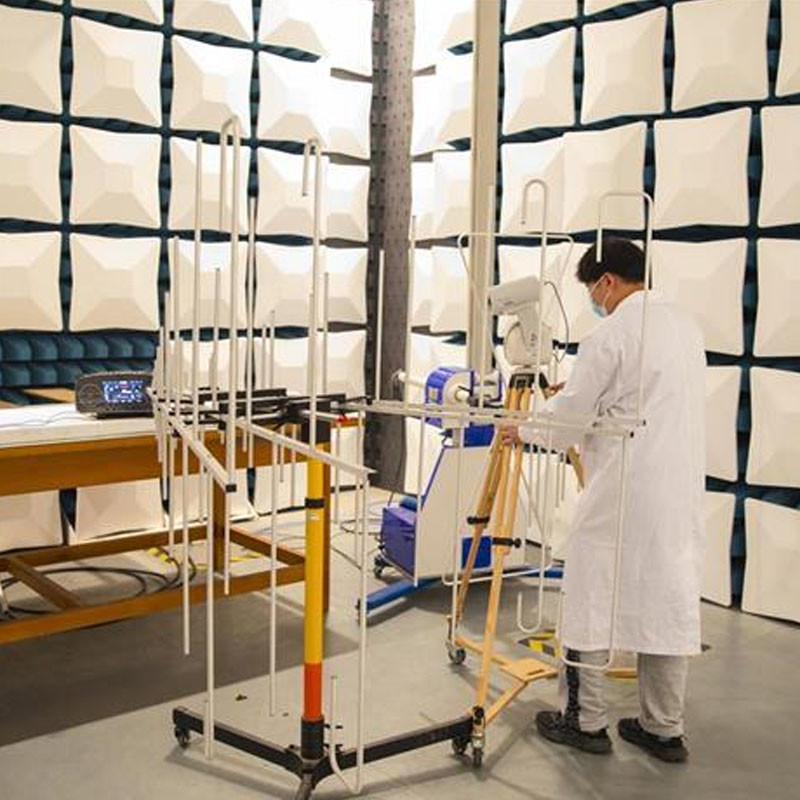
As artificial intelligence and advanced manufacturing converge, intelligent robots are accelerating their entry into global markets. Yet different countries and regions impose widely differing market-access requirements — from radio spectrum and electrical safety to battery management and mechanical safeguarding. Failure to meet any single requirement can leave a product stranded at the border. Understanding these certification rules is the first mandatory lesson for any robotics company going global.
An intelligent robot is a highly sophisticated mechanical device capable of a certain degree of autonomous operation based on pre-set programs and its own automatic control system. This autonomy manifests as semi-autonomous or fully autonomous operation, without the need for continuous direct human intervention. For example, in industrial production, intelligent robots can accurately complete product assembly according to pre-programmed instructions; in service scenarios, they can rely on autonomous navigation to guide customers.
By application, intelligent robots fall mainly into the following categories:
Industrial robots Primarily deployed in industrial manufacturing environments, performing complex and repetitive production tasks. In the automotive industry, industrial robots precisely execute welding, painting, and component assembly. Their high-precision operation and fast cycle times substantially improve productivity and product quality while reducing labor costs and workload intensity.
Agricultural intelligent robots Playing an increasingly prominent role in agriculture, covering multiple stages including planting, irrigation, fertilization, weeding, and pest and disease monitoring and control. For instance, smart irrigation robots use feedback from soil moisture sensors to precisely control the volume and timing of irrigation, ensuring crops receive adequate water while improving water-use efficiency.
Exploration robots Mainly used for exploration in unknown domains such as space exploration, deep-sea exploration, and polar expeditions. Taking the Mars rover as an example, it can travel autonomously across the distant Martian surface, conducting in-depth investigations of geological structures, climatic conditions, and signs of life, and transmitting large volumes of data and imagery back to Earth — providing invaluable material for humanity's understanding of the universe.
Service robots Widely used in everyday scenarios to provide a variety of convenient services. In hospitals, guidance robots offer patients directions to the right department; in hotels, delivery robots bring requested items accurately to guest rooms; in homes, robotic floor cleaners automatically sweep dust and debris, effectively reducing the household burden.
Classification matters because different applications lead to markedly different certification pathways and standards in the target market — and this is precisely the logical starting point for the country-by-country certification systems discussed below.
An intelligent robot is a typical cross-disciplinary complex system, integrating mechanical engineering, electronic engineering, computer science, control theory, and more. Its subsystems and components must work in close coordination to ensure overall operation: mechanical design must balance motion flexibility with payload capacity; the electronic control system must achieve precise control of various sensors and actuators; and software algorithms handle core tasks such as perception processing, path planning, and decision-making.
The complexity of the system directly determines the breadth and granularity of testing. Beyond electrical and electronic safety (guarding against electric shock, short circuits, and similar hazards), wireless emission testing is also required — since most intelligent robots feature wireless communication, their signal emissions must comply with relevant standards to avoid interference with other devices. The stability and data transmission efficiency of communication technologies such as Bluetooth and 4G/5G are likewise key test focuses. In addition, lithium battery safety cannot be overlooked: as a common power source for robots, lithium batteries must pass rigorous testing for overcharge, over-discharge, short circuit, and more, as their safety is directly tied to the safety of the entire machine.
Purpose: To test radio frequency and electromagnetic compatibility, ensuring that a robot's wireless communication functions comply with FCC regulations. The focus is on verifying parameters such as transmit power, frequency range, and modulation scheme in the relevant radio bands, so as to prevent harmful interference to other wireless devices.
Scope of application: All intelligent robots with wireless communication functionality must obtain FCC certification. Whether data is transmitted via Bluetooth, Wi-Fi, or other wireless means, the robot must satisfy FCC requirements before it can be sold in the U.S. market.
Purpose: UL certification is one of the most influential product safety certifications in the U.S. market. It focuses on electrical safety, fire resistance, and protection against mechanical hazards, and rigorously evaluates product structure and materials to ensure that the product causes no harm to persons or the surrounding environment under normal use as well as reasonably foreseeable misuse. For robotic products, UL has issued dedicated standards including UL 1740 (Robots and Robotic Equipment) and UL 3300 (Service Robots).
Scope of application: Nearly all types of intelligent robots may apply for UL certification, and it is especially relevant for products that are electrically driven, battery-powered, or closely associated with household environments. Obtaining the UL mark helps build trust among consumers and purchasers alike, significantly enhancing a product's market competitiveness.
Global United Technology Services Co., Ltd. holds the internationally recognized CNAS (L5775) laboratory qualification, U.S. FCC NVLAP accreditation, and domestic CMA inspection and testing qualification. We are capable of issuing internationally mutually recognized test reports and are authorized by major institutions including ITS (UK), TÜV (Germany), and Eurofins (Belgium). Focusing on the core testing fields of EMC, electrical safety, wireless RF, and chemical testing certification for export compliance, we deliver a one-stop service covering "testing · rectification · technical training" — making us your ideal partner!
Contact Us
Email: vicky.mo@gtstest.com
WhatsApp: +86 18025848511
WeChat: 18025848511